Tuesday, February 7, 2017

Let's Talk... 
Did you Know???


Dodd-Frank changes could shuffle 

real estate rules...

NEW YORK (AP) – Feb. 6, 2017 – President Donald Trump has wasted little time in beginning a push to reverse the stricter banking regulations enacted after the 2008 financial crisis. Trump has branded the Dodd-Frank Act "a disaster" – a regulatory overreach that slowed the economy and stifled lending to consumers and businesses.
Dodd-Frank did impose tighter curbs on U.S. banks and how they operate. And the restrictions fell particularly hard on community banks. Yet it's also true that by just about every measure, the U.S. economy is healthier now: The job market is solid. The housing market has largely rebounded. And the banking system, which nearly collapsed at the height of the crisis, is safer and sturdier.
The Dodd-Frank Act took effect in 2010, a response to reckless risk-taking by banks that inflated a housing bubble, kindled the financial crisis and eventually required a $700 billion taxpayer bailout. The law was designed, most broadly, to guard against another catastrophe.
But Republicans in Congress, emboldened Wall Street lobbyists and the Trump White House argue that the law went too far and want to roll back many of the regulations. Just as vociferously, defenders of Dodd-Frank say it remains a critically important bulwark against excessive financial risk-taking and should stay intact.
"The Dodd-Frank Act is a disastrous policy that's hindering our markets, reducing the availability of credit and crippling our economy's ability to grow and create jobs," Sean Spicer, Trump's press secretary, said Friday.
Here's a closer look at the law and what's at stake:
Q: What does Dodd-Frank really do?
A: It's a complicated law. But among other goals, it had one overarching purpose: To erase any perception that some mega-banks were "too big to fail" – that is, that they would require another taxpayer bailout in case of a new financial crisis because their collapse would threaten the entire banking system. Take the bankruptcy of Lehman Brothers, once a storied Wall Street investment bank. Its bankruptcy at a precarious moment for the banking system helped ignite a full-blown crisis. Once Lehman failed, the government felt compelled to rescue other financial giants that were deemed too important to the whole system.
Dodd-Frank required the banks to hold much more money relative to how much they lend. It created the Consumer Financial Protection Bureau, which aims to protect consumers from abusive financial products. Large banks had to prove they could survive a hypothetical financial crisis or a deep recession. And they had to devise plans to dismantle themselves in an orderly fashion if they ever had to seek bankruptcy.
Q: So has Dodd-Frank worked?
A: The balance sheets of the nation's biggest banks are far more robust than before the crisis and more prepared to endure financial setbacks. And most analysts say the restrictions imposed by Dodd-Frank largely worked as a safeguard against another crisis. Yet not until another crisis actually hits will it be clear whether Dodd-Frank works as well as its supporters claim. And no one knows for sure whether the law has caused the economy to grow more slowly than it otherwise would.
Q: Has Dodd-Frank made it harder for people to buy a home or car, or to borrow?
A: The law did restrict certain risky mortgages and reined in other types of lending that had previously faced little or no regulation. But Americans, speaking broadly, have ample access to credit. Immediately after the financial crisis, banks scaled way back on lending. Loans were harder to get. Yet for most people, those days are largely gone. The banking industry is making more loans in various forms. And Americans, who drastically pared their debt during the recession, are borrowing again.
Americans have $992 billion in balances on their credit cards, near a record high set in 2008, according to data from the Federal Reserve. Auto loans outstanding total $1.10 trillion, also a record. And the average rate on those auto loans is just below 4.5 percent, near a record low.
What's more, mortgage debt has reached $14.2 trillion, not far below the record set in mid-2008, when the housing market was in a bubble soon to burst. Mortgage rates have been near historic lows for years. (One notable exception: Home equity loans, popular during the housing bubble, have declined since 2009.)
"The argument that Dodd-Frank choked the lending markets is simply not in the data," said Mike Konczal, a fellow at the left-leaning Roosevelt Institute.
Even the most vulnerable Americans have re-entered the financial system. Roughly 7 percent of Americans were unbanked in 2015, down from 8.2 percent in 2011, according to the Federal Deposit Insurance Corporation. (The unbanked are people who have no bank account and are considered largely shut out of the mainstream financial system.)
Q: Have the banking industry's profits been hurt by Dodd-Frank?
A: Because banks are in the business of lending, the industry's fortunes rise and fall in sync with the economy. And as the economy recovered from the Great Recession, so did bank profits.
The roughly 6,000 banks insured by the FDIC earned $168.8 billion in profits in the past four quarters, a record, and above the $146.2 billion they earned in the 12 months leading up to the 2007 housing bust.
Still, while profits for large Wall Street banks have recovered, the gains are due largely to how much bigger the big banks became after the crisis. Banks' profits on individual loans are historically low. Yet they have managed to more than make up the shortfall through fees and sheer volume of loans.
Profits at small community banks are another story. They have not recovered. Dodd-Frank's stricter regulations disproportionally hit smaller banks. Unlike the banking giants, community banks don't have the economies of scale to make up for lower profit margins. Some modifications to Dodd-Frank enacted during the Obama administration have been intended to provide some relief to small community banks.
Small banks – those with less than $1 billion in assets – had a return on equity of 11.8 percent at the start of 2007. That figure is now down to 9.6 percent.
Critics of Dodd-Frank say it's slowed or even stopped the growth of the banking industry since its passage – forcing banks to merge and consolidate just to reach the size they need to survive. Before the recession, there were roughly 7,100 commercial banks in the United States. Nearly 10 years later, the figure is 5,100. Some banks failed in the crisis. But more were gobbled up by competitors or merged.
Q: Haven't the Federal Reserve's low interest rates helped?
Yes. In a response to the financial crisis, the Fed cut its main interest rate to near zero in 2008 and kept it there until December 2015. Though the Fed has raised rates twice, they are still well below historical averages. As a result, banks can still lend at low rates.
Consider, too, banks' average net interest margin. This measures how much it costs banks to lend and what rate they charge. That figure is now 3.03 percent. It means that if it costs a typical bank 2 percent to borrow money, it's lending it at 5.03 percent. That 3.03 percent margin is also near a record low.
This suggests that if banks are facing higher costs from tighter regulations and compliance with Dodd-Frank, they don't seem to feel compelled to pass on those costs to consumers.
Bankers say a key problem for the industry is not so much a lack of access to credit as an unwillingness by consumers and businesses to borrow. The lack of demand for loans has forced banks to lower their rates to compete for business. Ultimately, of course, that benefits consumers and businesses.
Q: What about lending to small businesses?
A sharp pullback in business loans followed the Great Recession and the passage of Dodd-Frank. But lending to small businesses soon recovered. And just like U.S. shoppers, businesses large and small are borrowing at high levels again.
Companies have borrowed over $1.1 trillion in commercial and industrial loans from the big banks as of December 2016, a record high, according to the Fed. Even among small banks, business loans totaled $573 billion as of December, also a record high.
AP Logo Copyright © 2017 The Associated Press, Ken Sweet. All rights reserved. This material may not be published, broadcast, rewritten or redistributed.   
Related Topics: RESPA

Friday, January 20, 2017


Let's Talk Hot Off the Press... Naples Area Real Estate Inventory Outpaced Sales in 2016
 
Naples, Fla. (January 20, 2017) – Broker analysts who analyzed the Annual, 4th Quarter and December 2016 Market Reports released 
by the Naples Area Board of REALTORS® (NABOR®), which tracks home listings and sales within Collier County (excluding Marco Island) 
concluded that the local real estate market performed well in 2016 despite several unpredictable market influencers that impacted the housing market 
such as the February stock market slump, a low Canadian exchange rate, Brexit and Zika fears, and the presidential election. Brokers agree that factors 
appear to be in place for a good market in 2017.
 
“The 2016 year-end report indicated that we started the year with an inventory shortage but ended at a level that positions us to see 
sales begin to catch up in 2017,” said Bill Poteet, owner and broker at Poteet Properties. 
 
Overall inventory increased 34 percent to 5,946 homes in year ending 2016 from 4,426 homes in year ending 2015. The Naples Beach 
area experienced the highest number of new listings with 437 homes added to its inventory during 2016. However, and according to the 
Report, the Naples Beach area also saw the largest decrease in overall closed sales during 2016 of all other geographic areas reported. 
Overall closed sales in this highly desired location decreased 21 percent to 1,525 homes in year ending 2016 from 1,922 homes in year ending 2015. 
 
Closed sales of condominiums in the East Naples area and single family homes in the $500,000 to $1 million price category increased in 2016, 
despite overall closed sales decreasing 13 percent to 8,510 homes in year ending 2016 from 9,751 homes in year ending 2015. 
 
According to Coco Waldenmayer, a managing broker at John R. Wood Properties, competition from new home developments in 2016 played 
a role resulting in fewer sales of existing homes in 2016 compared to 2015, which was a very strong year. “The report showed the highest number 
of closed sales in 2016 occurred in the North Naples area, which is also where a rash of new home development is taking place.”
 
“With a surge in inventory from new construction, buyers had more options in 2016,” said Adam Vellano, West Coast Sales Manager for BEX Realty Florida. 
“Unfortunately, developers and builders of newly constructed homes in Collier County do not fully utilize NABOR®’s MLS [Multiple Listing Service]; 
and therefore, the Market Report, while useful as a tool to track resale market performance, does not capture or reflect a clear picture of what’s happening 
in new construction.” 
 
Of note, the annual Market Report showed that the overall median closed prices for homes above $300,000 did not change during 2016. In fact, homes 
in the $500,000 to $1 million price category experienced only a 3 percent decrease in their overall median closed price to $650,000 in year ending 2016 
from $667,000 in year ending 2015. Brokers attribute this reduction in median closed price, and the 2 percent decrease in overall median closed price for 
the $1 million to $2 million price category in 2016, to better informed and motivated sellers. 
 
The NABOR® Annual 2016 Market Report provides comparisons of single-family home and condominium sales 
(via the Southwest Florida MLS), price ranges, and geographic segmentation and includes an overall market summary. 
The NABOR® Annual 2016 sales statistics are presented in chart format, including these overall (single-family and condominium) findings: 
 
CATEGORIES20162015CHANGE
Total homes under contract (pending sales)8,90310,366-14%
Total closed sales8,5109,751-13%
Median closed price (month/month)$320,000$308,0004%
Total active listings (inventory)5,9464,42634%
Average days on market 897814%
Single-family closed sales4,2684,640-8%
Single-family median closed price (month/month)$400,000$385,0004%
Single-family inventory3,0152,43424%
Condominium closed sales4,2425,111-17%
Condominium median closed price (month/month)$253,000$250,0001%
Condominium inventory2,9311,99247%
 
As noted by Jeff Jones, Managing Broker at the Naples-Park Shore office of Coldwell Banker®, the Report showed a 
14 percent increase in days on market for year ending 2016. He went on to explain that “the number of days on market 
is influenced by median closed prices and closed sales activity. By the last month of the year, the overall days on market 
decreased 8 percent [to 88 days in December 2016 from 96 days in December 2015], and we didn’t see a rise in median 
closed prices during December either. I think this shows us that sellers are beginning to heed their REALTOR’s recommendation 
to list their property at a reasonable market price initially rather than to start high and then go through two or three price reductions. 
Priced correctly, properties will move in a reasonable length of time.”
 
As pointed out by Tom Bringardner, Jr., President/CEO of
Premier Commercial, the first wave of Baby Boomers to hit 70 years 
old will take place in 2017, which may result in increased home sales in the area as these potential buyers will be required to take 
mandatory distributions from their retirement accounts and may begin looking at a second home in a more hospitable climate as 
a safe investment. 

I have provided the full details report... Click Here.

View December 2016 Market Statistics


View Annual 2016 Market Statistics

As the Brokers stated that Market Reports in 2016 predicted that inventory would rise and they believe our inventory of existing 
homes will continue to increase in 2017. 
My knowledge of our local Real Estate Market can help you when pricing your home to sell by pricing your property correctly and when you are identifying a property to negotiate you will be able to see just how important it is to know the entire local Real Estate market trends that I will be able to provide to you.
As always I look forward to any and all question you may have regarding our Real Estate market and look forward to hearing from you by e-mail at Michelle@NaplesHomeSweetHome.com or by calling 239.404.7787.

I hope you have a fantastic weekend.


Michelle J. DeNomme, REALTOR, GRI
Cellular Phone I  239.404.7787
Berkshire Hathaway HomeServices Florida Realty
Office: 239.659.2400
E-Fax Number: 239.236.5550
Website:  www.NaplesHomeSweetHome.com        
Twitter Me: DeNommeRealtor

 
The Naples Area Board of REALTORS® (NABOR®) is an established organization (Chartered in 1949) whose members have a positive and progressive impact on the Naples Community. NABOR® is a local board of REALTORS® and real estate professionals with a legacy of nearly 60 years serving 6,000 plus members. NABOR® is a member of the Florida Realtors and the National Association of REALTORS®, which is the largest association in the United States with more than 1.3 million members and over 1,400 local board of REALTORS® nationwide. NABOR® is structured to provide programs and services to its membership through various committees and the NABOR® Board of Directors, all of whose members are non-paid volunteers.
 
The term REALTOR® is a registered collective membership mark which identifies a real estate professional who is a member of the National Association of REALTORS® and who subscribe to its strict Code of Ethics.

Thursday, January 19, 2017


Let's Talk...

Art Fest Naples this weekend 
at Fleischmann Park
The 20th annual Art Fest Naples
>> What: A juried show with 140 artists in all mediums 
>> When: 10 a.m. to 4 p.m. Saturday and Sunday, Jan. 21-22
>> Where: Fleischmann Park 
>> Admission: Free, but donations welcome to The Special Needs Children Fund 
>> Info: 634-2337 or www.artfestnaples.com

Thursday, January 12, 2017


Let's Talk Hot off the Press...


It's a Fantastic Time to Buy in South West Florida. 
What a Great opportunity for you to live here!
 
The Naples Real Estate Market at a Glance presented by Michelle DeNomme, Your South West Florida REALTOR, GRI

The news this month is that Local Real Estate Brokers as well as National Economists are predicting a strong season this year.  Broker Analysts agreed that factors that negatively impacted tourism and seasonal migration in 2016 like the February stock market slump, a low Canadian exchange rate, Brexit and Zika fears, and the presidential election are behind us now.  The only obstacle left to overcome is irrational legacy pricing behaviors of some sellers. Our statistics show that realistic pricing is what is causing many homes to sell in 30 days or less. 

The Naples market currently has an 8 month supply of homes for sale, which is up 40% over last year.  Builders continue to  provide more new home inventory making choices ery abundant for buyers.  Interest rates are expected to increase twice in 2017, about a quarter point each time.  Anticipation of this increase is expected to increase sales activity for the first quarter of 2017. One National Economist stated “If interest rates rise slowly, we may see a nice bump in home sales and mortgage availability as buyers see low interest rates slowly fading and banks have higher rates to buffer against risk”.

The median sales price in Naples decreased 5% in November 2016 compared to November 2015.  This decrease varies by price range and area, the price range under $300,000 saw no decrease in median closed price.

Click below to view the NABOR Report


I would be my honor to assist you and your friends and family with your real estate needs.  
Feel free to contact me with any questions you may have by e-mail or by calling 239.404.7787.
I wish you and your family a very Happy New Year!
Michelle

Michelle's Reminders:
Don't forget about your Homestead Tax Excemption.

Real Estate Tidbits
 
Around Naples


Michelle's Food Picks of the Month


A| Chef Asif Syed of 21 Spices leads a three-course cooking class to 
introduce foodies to the intricacies of Indian cuisine at 11 a.m. Monday, Jan. 16. 
$55, reservations required. 4270 Tamiami Trail E. 919-8830.


My Featured Listings
 
  • It must be Naples, 
  • It must be Extraordinary, 
  • It must be...


Royal Harbor | Boating Community
 

1550 Mullet Lane
Royal Harbor
$3,692,000


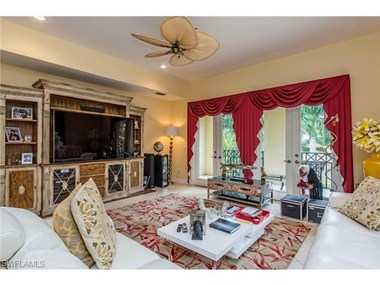
Castillo at Tiburon | Golf & Resort Style Development
 

2834 Tiburon Blvd East, Unit 103
Tiburon Resort  
$799,000


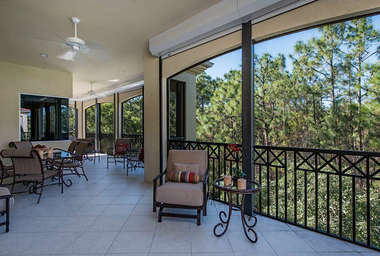
Castillo at Tiburon | Golf & Resort Style Development
 

2809 Tiburon Blvd East, Unit 103
Tiburon Resort  
$749,000
Buyer Incentive at Closing,
contact Michelle today for details.